Classical yoga – the way of meditation
Classical Yoga
The practice of classical Yoga is particularly valuable, then as now, because it teaches us to be integrated in the present moment. Mindful of the here and now. Not influenced by the emerging thoughts about the past and future. It’s about cultivating awareness. But how do we do that in a time when everything is so fast paced. Yoga is about connecting with your body, mind and the spiritual. That’s why in classical Yoga, or Ashtanga Yoga, we work our way from the outer to the inner. You start with a peaceful attitude towards yourself and your environment. Then we practice asanas to free the body from tension and blockages. The body relaxes and energy can flow more easily. We round off the whole program with breathing exercises, relaxation and meditation. Classical Yoga does not give a superior role to physical exercises. The goal is to sit in silence in meditation. We achieve this through the various techniques of all the limbs of this Yoga tradition. The combination of the different aspects of Ashtanga Yoga ideally prepare the practitioner for meditation practice. Ashtanga Yoga is the Yoga of the eight limbs. The eight-limbed Yoga path as described by Patanjali in the Yoga Sutra. Ashta is eight, anga means limbs, parts, and Yoga is the path to unity, the path to harmony. Yoga is the path and the goal at the same time.
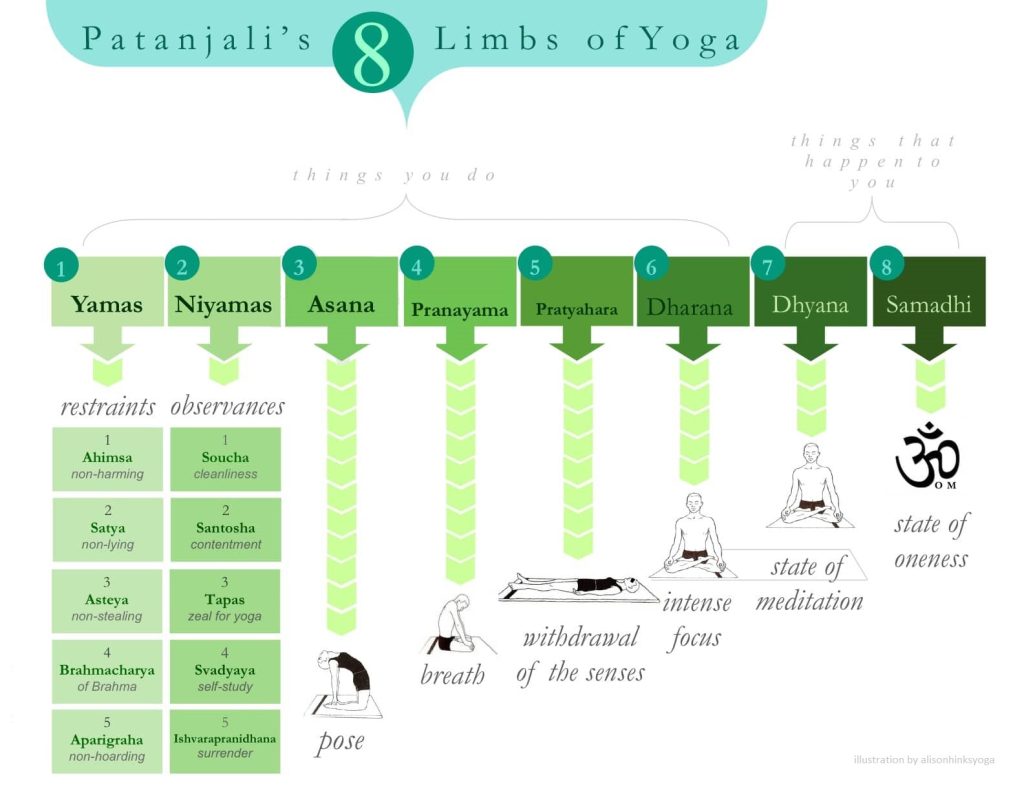
The eight limbs are as follows: Yama, Niyama, Asana, Pranayama, Pratyahara, Dharana, Dhyana and Samadhi. One can say one practices six limbs simultaneously, and the seventh and eighth follow at some point through regular practice. The first limb is Yama. These are the recommendations in dealing with one’s environment; one can say interpersonal ethics. Then there is Niyama, which is the personal discipline, the personal way of life or inner attitude. Then follows asana. Asana is then the sitting posture for meditation and the body postures. This is followed by pranayama. Pranayama is the breathing exercises. Literally, Ayama means the control, the control of Prana, the life energy, precisely through the breathing exercises. In Yoga, we see breathing and air as the gross form of prana. Therefore, one wants to become master of one’s own breathing in order to better control one’s life energy. Pratyahara, to quiet the mind, to draw the senses inward, as the fifth of the eight limbs. This limb is already about more abstraction. By actively and consciously relaxing, one practices Pratyahara. One now moves from the outer and material world into the inner, spiritual and immaterial world. Sixth comes Dharana, concentration on an object. In our tradition, this is concentration while meditating or sitting in silence. The next two limbs, Dhyana and Samadhi occur as Dharana becomes deeper. Dhyana is often translated as meditation. Samadhi is the superconscious state of merging and sinking deeply. Yoga is both the goal and the path. Yoga is the merging or union with all that is. Union with one’s true nature, the Self or also called Purusha. We achieve this primarily through the practice of meditation. We want to integrate the state of meditation into our lives so that we do not suffer from the events of life. Practiced regularly, the practitioner experiences more energy and joy in life.
Yoga also has a therapeutic effect, because the methods promote one’s own self-healing powers, so that one can overcome, for example, anxiety and stress-related psychosomatic diseases.
Meditation
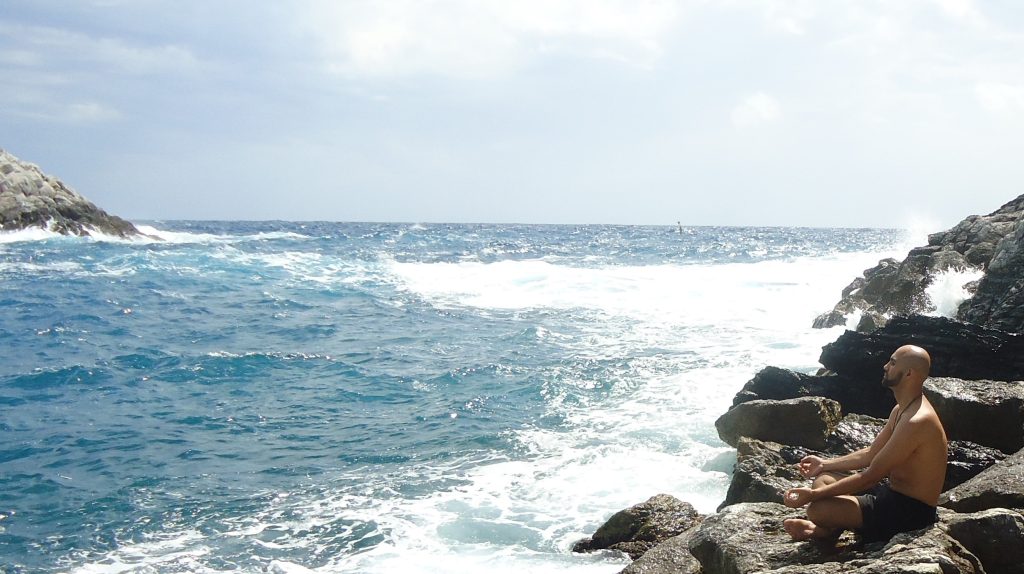
Meditation is the natural state of man. There are many reasons why people want to get acquainted with this practice. Meditation can help us experience relaxation and calm. Through concentration and mindfulness, thoughts calm down. This stillness of thought is a state that can allow us to experience our innermost being. Difficult life situations can be viewed more clearly and relaxed, as we are not so attached to the events of life. It is a way to deal more intensively with oneself and one’s own life.
We will practice guided meditations and meditations in silence.
In meditation we practice being aware and mindful. The mind is integrated in the present moment. As thoughts quiet, the mind becomes clear. The effects range from serenity, clarity, empathy to centeredness and spiritual insights as well as mystical experiences.
Nature Connection & Mindfulness Based Nature Experience
As a nature pedagogue, I combine nature with Yoga. This is a holistic approach as it works its way from the gross material to the inner, spiritual and subtle levels of the human being. Yoga evolved from the forest and mountain civilizations of South Asia. Nature education and Patanjali’s systematization of Yoga are the foundation of my work. Nature serves as a model for a harmonious coexistence of all life forms. Through nature experiences and nature connection we can recognize our own nature. We experience ourselves as a whole, connected to existence. Through forest bathing as well as through hikes to places of power in nature, we also take advantage of the positive therapeutic effects. The combination of Yoga and nature can significantly support the practitioner in his development. Here, above all, a great focus is placed on the breathing exercises or breath work. In nature the air is fresh and pure. Yogic & shamanic breathing techniques have a therapeutic and calming effect on body and mind, so that we can experience more energy and balance. You can draw strength from nature and strengthen your practice. Likewise, the relaxing atmosphere of nature supports the consultation and conversation with the practitioner.
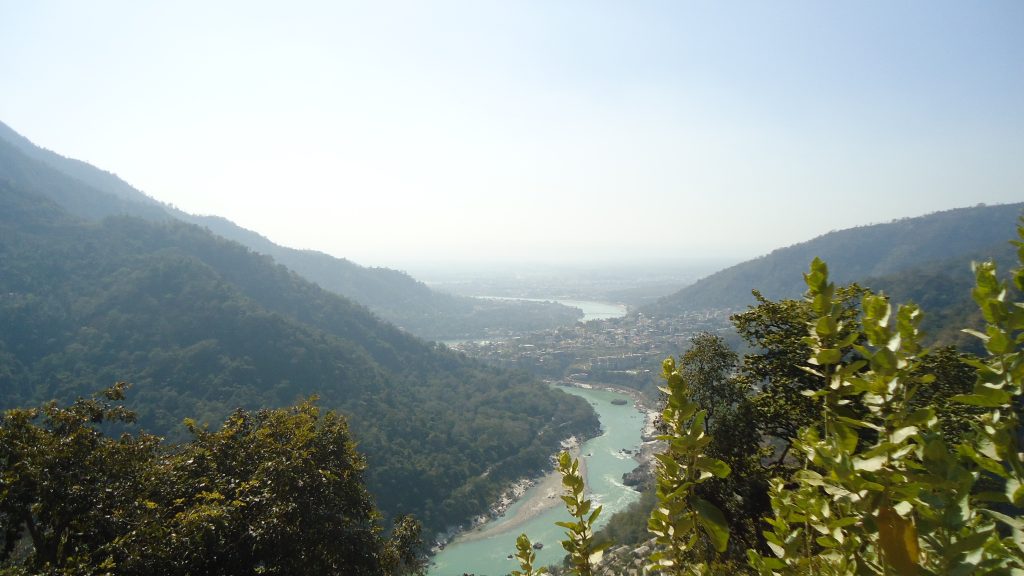
In my work, forest, mountain and coastal landscapes are visited in particular. Scientific studies prove that forest bathing has a healing effect on people. It is also no coincidence that many spiritual paths of mankind have emerged mainly in forest and mountain regions. The mountains are meditating giants that speak deeply to the core of our being. The mountains have a calming effect on us and can thus decelerate us. The view from a peak does not only visually change the view of life. Problems of human life seem smaller and not so overwhelming. These landscapes are particularly well suited for working with Yoga in nature. A person can energetically upgrade his body so that he gains more strength, stamina and health. These qualities help the practitioner in his development and in the pursuit of self-realization, as he or she has the conditions to immerse himself in meditation and experience peace.
“Through the outer nature we can experience our inner nature.”